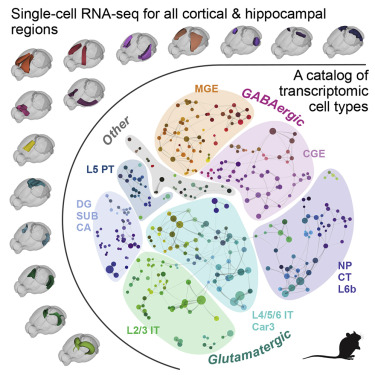
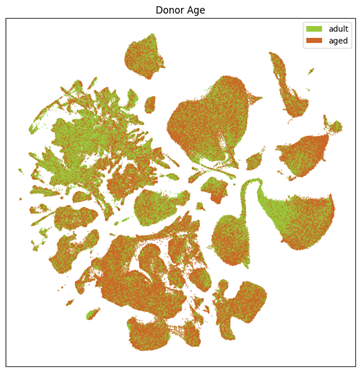
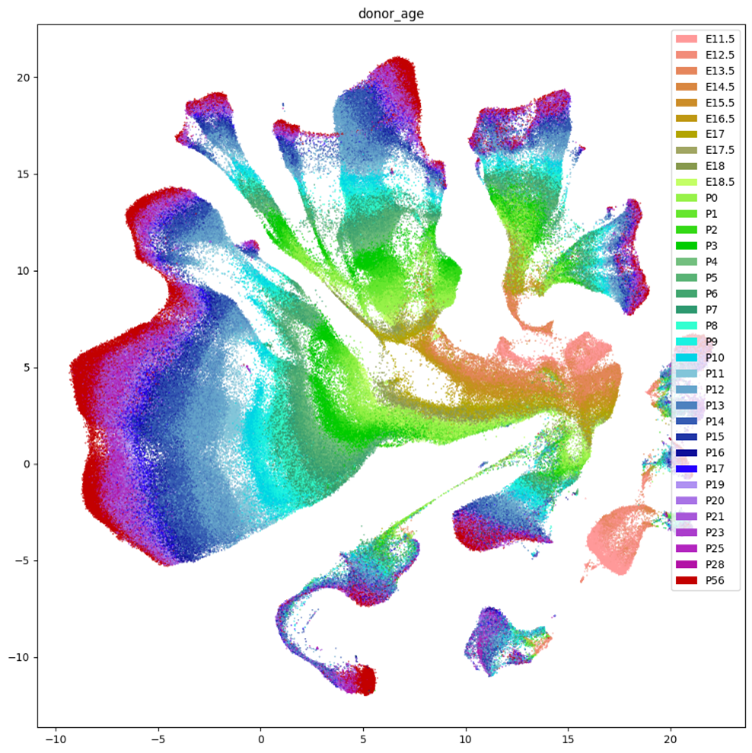
An integrated taxonomy of the whole mouse brain built upon two publicly released transcriptionally defined WMB taxonomies from Allen Institute for Brain Science and Broad Institute.
The Consensus, Whole Mouse Brain (WMB) integrated taxonomy is built upon two publicly released transcriptionally defined WMB taxonomies: one derived from single-cell RNA sequencing (scRNA-seq) data and the other from single-nucleus RNA sequencing (snRNA-seq) data. The Allen Institute for Brain Science (AIBS) taxonomy, based on over 4 million scRNA-seq profiles, defines 5,322 clusters organized hierarchically into 34 classes, 338 subclasses, and 1,201 supertypes. The set of data products for this release can be found here. In parallel, the Broad Institute taxonomy, constructed from 4.4 million snRNA-seq profiles, defines 16 classes, 223 metaclusters, and 5,030 clusters. Integrating these two large-scale taxonomies into a unified framework represents a natural and impactful next step, enabling a consensus view of cell types across the entire mouse brain and benefiting the broader neuroscience community.
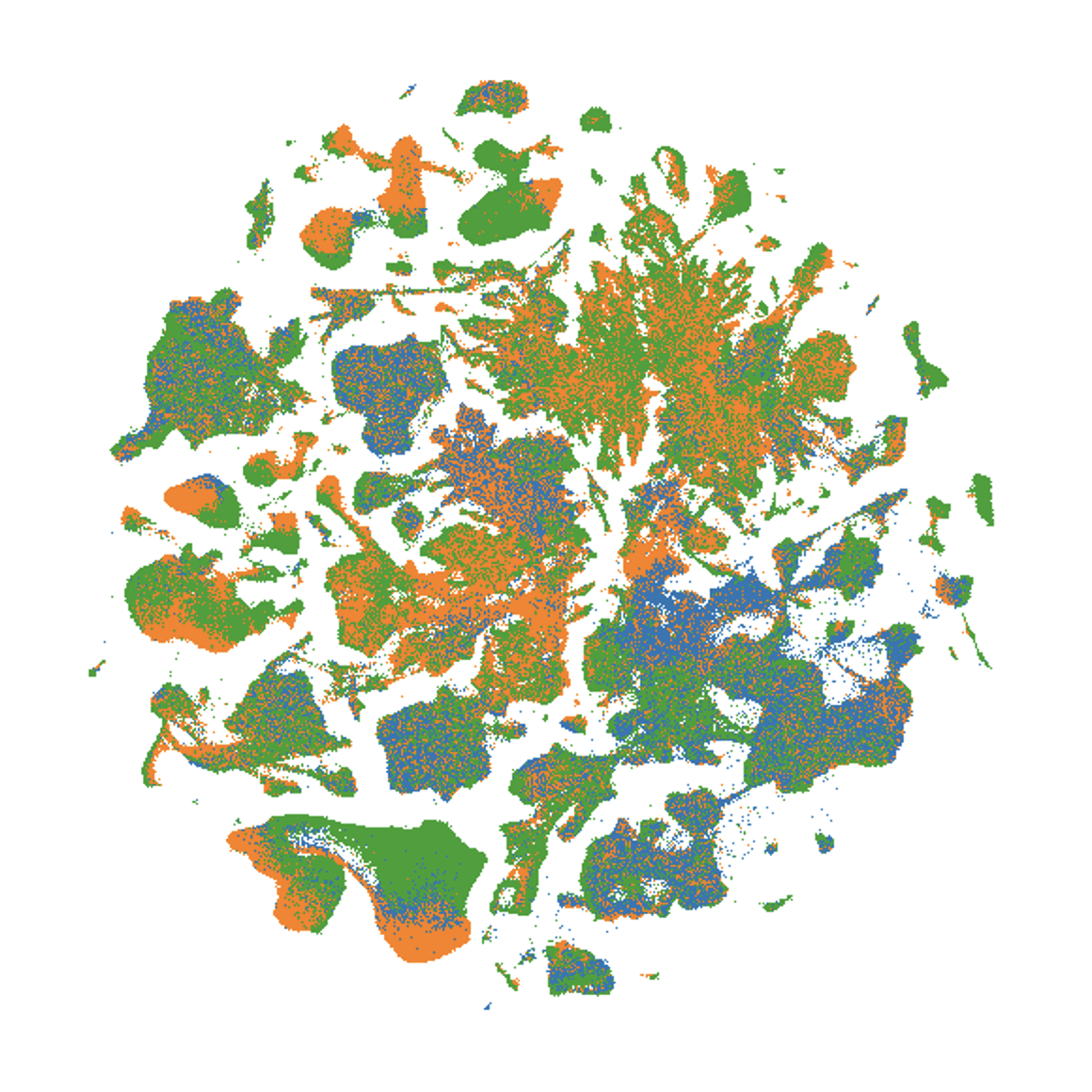
To generate this consensus taxonomy, we applied the AIBS Quality Control (QC) and post-integration QC pipelines, retaining 7,651,713 cells and nuclei. Integration of scRNA-seq and snRNA-seq data was performed using scVI, with subsampling by original clusters to mitigate sampling imbalance across cell types and brain regions, followed by projection of all remaining cells into a shared latent space. The same iterative clustering strategy used in the AIBS taxonomy was applied in a hierarchical manner—globally, at nine neighborhood levels, and across eight finer group levels. The resulting comprehensive taxonomy comprises a hierarchically arranged set of cell types with 9 neighborhoods, 43 classes, 414 subclasses, 1,386 supertypes, and 6,721 clusters. A detailed cell type annotation table accompanies the taxonomy, including hierarchical membership, anatomical localization, and neurotransmitter identity. All associated metadata is publicly available as an AWS Public Dataset hosted on Amazon S3 and through the Allen Brain Cell Atlass Access (abc_atlas_access) package.
Taxonomy Name: 20251030_BICCN-Adult_Mouse_WholeBrain_consensus
Taxonomy Description: 2025 Whole Mouse Brain sc/snRNAseq consensus taxonomy
Species: Mouse
Version: 1.0.0
CCN Number: CCN202510310
AIT Number: 33.0
Resources
Download the Data
Programmatically access the data
Download the Allen Institute Taxonomy (AIT) file in .h5ad format for the Full Dataset (7644010 x × 21205, 414GB) from AWS s3
Download the Allen Institute Taxonomy (AIT) file in .h5ad format for the Subsampled Data (1605495 × 21205, 228GB) from AWS s3
Publication
To be added
ABC Atlas
To be added
MapMyCells
To be added
| Platform |
Consensus Subclass Label |
 |
 |