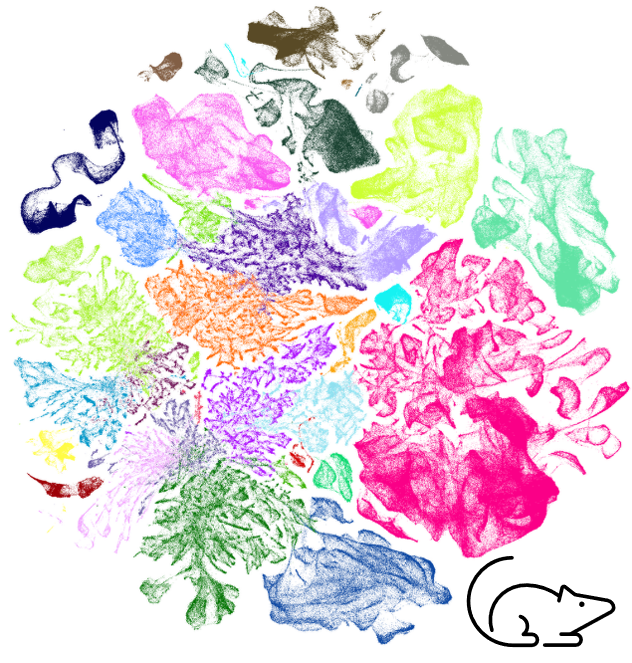
A high-resolution transcriptomic atlas of cell types in the aging mouse brain
Overview
The Mouse Aging dataset (Jin et al. 2025) is a comprehensive single-cell RNA sequencing (scRNA-seq) dataset containing ~1.2 million high-quality single-cell transcriptomes of brain cells from young adult(2 months) and aged (18 months) mice of both sexes, from regions spanning the forebrain, midbrain, and hindbrain. High-resolution de novo clustering of all cells results in 847 cell clusters and reveals at least 14 age-biased clusters that are mostly glial types. Clusters in the study were mapped to the whole mouse brain taxonomy (WMB-taxonomy, Yao et al. 2023) to provide class, subclass and supertype annotations; the young adult mouse portion of the dataset is a subset of the whole mouse brain data set.
Taxonomy Name: 20241130_Aging_Mouse_WholeBrain_10X
Taxonomy Description: Aging Mouse Brain Taxonomy
Species: Mouse
Resources
Download the Data
Download and explore the data via Python notebook
Publication
Brain-wide cell-type-specific transcriptomic signatures of healthy ageing in mice
ABC Atlas
Explore the data in the ABC Atlas
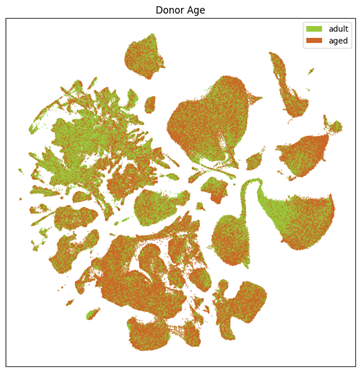
A taxonomy of the mouse visual cortex cell types spanning development.
Overview
The Developing Mouse - Visual Cortex taxonomy is derived from a single cell transcriptomic dataset containing568,654 cells from donors ranging in age from embryonic to adult. The cell-type assignment is a four-level taxonomy defining 15 classes, 40 subclasses, 148clusters and 714 subclusters. This cell-type assignment is broadly consistent with those from the previous studies from the Allen Institute for Brain Science, Whole Mouse Brain (WMB) and the Broad Institute whole mouse brain taxonomy at the subclass level while providing finer cell-type and temporal resolutions with additional subcluster annotations.
Taxonomy Name: 20260131_Developing_Mouse_VIS_10X
Taxonomy Description: Developing Mouse - Visual Cortex
Species: Mouse
Resources
Download the Data
Download and explore the data via Python notebook
Publication
Continuous cell type diversification in mouse visual cortex development
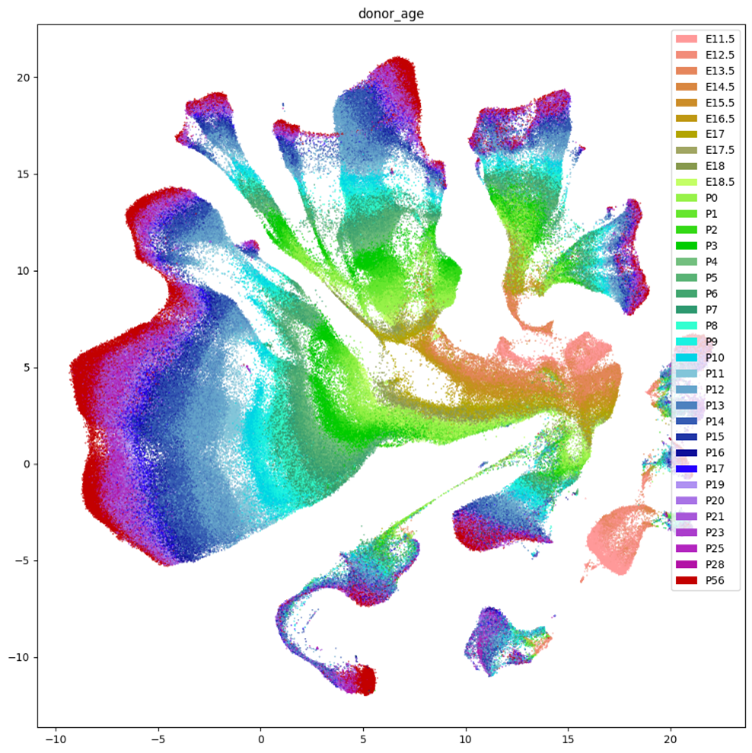
An integrated taxonomy of the whole mouse brain built upon two publicly released transcriptionally defined WMB taxonomies from Allen Institute for Brain Science and Broad Institute.
The Consensus, Whole Mouse Brain (WMB) integrated taxonomy is built upon two publicly released transcriptionally defined WMB taxonomies: one derived from single-cell RNA sequencing (scRNA-seq) data and the other from single-nucleus RNA sequencing (snRNA-seq) data. The Allen Institute for Brain Science (AIBS) taxonomy, based on over 4 million scRNA-seq profiles, defines 5,322 clusters organized hierarchically into 34 classes, 338 subclasses, and 1,201 supertypes. The set of data products for this release can be found here. In parallel, the Broad Institute taxonomy, constructed from 4.4 million snRNA-seq profiles, defines 16 classes, 223 metaclusters, and 5,030 clusters. Integrating these two large-scale taxonomies into a unified framework represents a natural and impactful next step, enabling a consensus view of cell types across the entire mouse brain and benefiting the broader neuroscience community.
To generate this consensus taxonomy, we applied the AIBS Quality Control (QC) and post-integration QC pipelines, retaining 7,651,713 cells and nuclei. Integration of scRNA-seq and snRNA-seq data was performed using scVI, with subsampling by original clusters to mitigate sampling imbalance across cell types and brain regions, followed by projection of all remaining cells into a shared latent space. The same iterative clustering strategy used in the AIBS taxonomy was applied in a hierarchical manner—globally, at nine neighborhood levels, and across eight finer group levels. The resulting comprehensive taxonomy comprises a hierarchically arranged set of cell types with 9 neighborhoods, 43 classes, 414 subclasses, 1,386 supertypes, and 6,721 clusters. A detailed cell type annotation table accompanies the taxonomy, including hierarchical membership, anatomical localization, and neurotransmitter identity. All associated metadata is publicly available as an AWS Public Dataset hosted on Amazon S3 and through the Allen Brain Cell Atlass Access (abc_atlas_access) package.
Taxonomy Name: 20251030_BICCN-Adult_Mouse_WholeBrain_consensus
Taxonomy Description: 2025 Whole Mouse Brain sc/snRNAseq consensus taxonomy
Species: Mouse
Version: 1.0.0
CCN Number: CCN202510310
AIT Number: 33.0
Resources
Download the Data
Programmatically access the data
Publication
To be added
ABC Atlas
To be added
MapMyCells
To be added
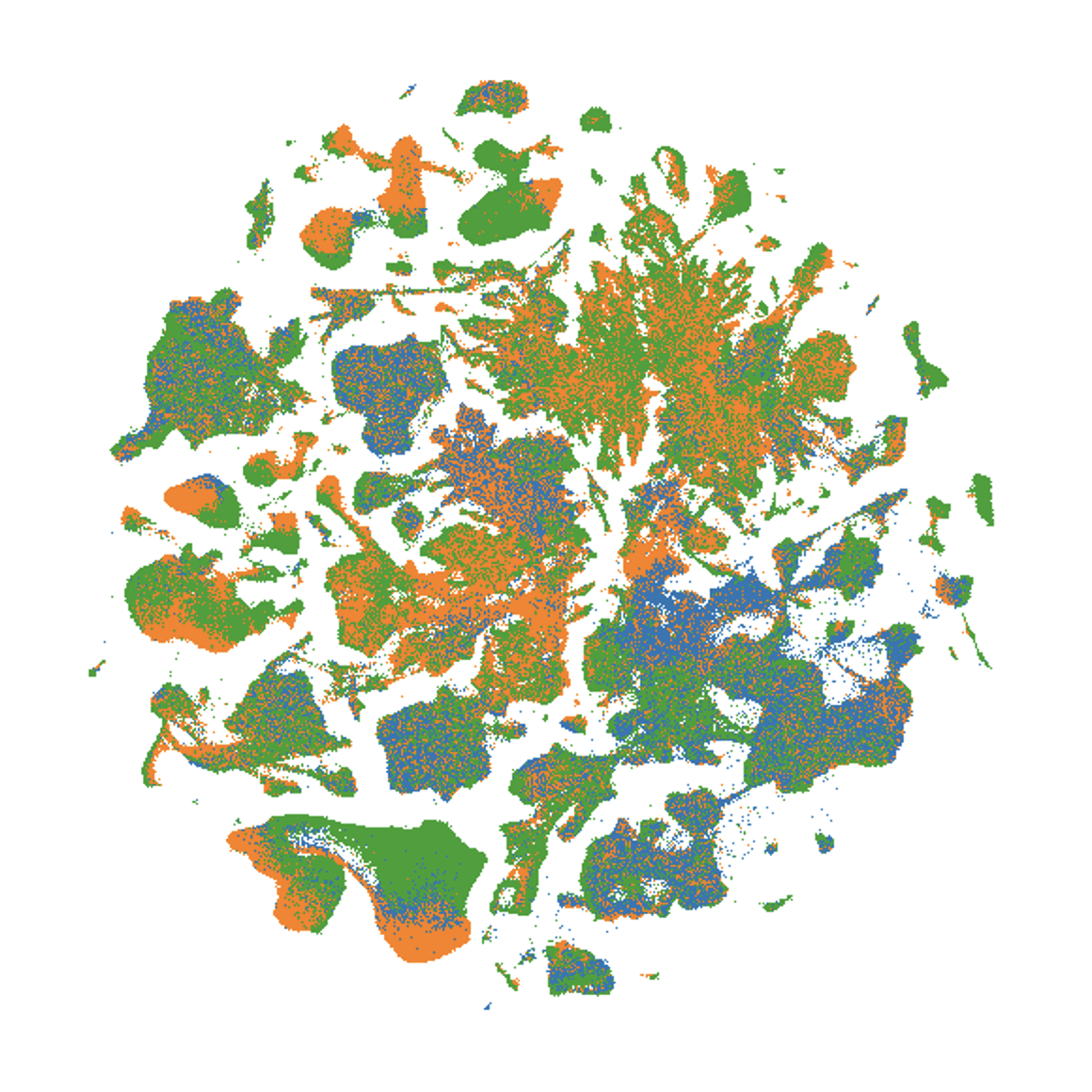
| Platform | Consensus Subclass Label |
|---|---|
 |
 |
A taxonomy of basal ganglia cell types in the human, macaque and marmoset brains, part of the Human and Mammalian Brain Atlas effort to create a cross-species taxonomy of brain cell types across mammalian species
Overview
The consensus basal ganglia cell type taxonomy is the result of iterative clustering and cross-species integration of transcriptomic data from single-nucleus 10x Genomics multiomic profiling. The taxonomy encompasses neurons from key structures within the basal ganglia, including the caudate (Ca), putamen (Pu), nucleus accumbens (NAc), the external and internal segments of the globus pallidus (GPe, GPi), ventral pallidus (VeP), subthalamic nucleus (STN), and substantia nigra (SN). By combining data from multiple primate and rodent species, this consensus taxonomy highlights both conserved and species-specific cell types.
Taxonomy Name: 08072025_HMBA-BICAN_CrossSpecies_BasalGanglia_10XMultiome
Taxonomy Description: Cross-Species Basal Ganglia Taxonomy
Species: Human | Macaque | Marmoset
Version: 1.0.0
CCN Number: CCN20250428
AIT Number: Human - 19.5 | Macaque - 11.9 | Marmoset - 101.0
Resources
Download the Data
Learn more about the project and download the data
Download the Human Taxonomy as Allen Institute Taxonomy (AIT) file in .h5ad format from AWS s3
Download the Macaque Taxonomy as Allen Institute Taxonomy (AIT) file in .h5ad format from AWS s3
Download the Marmoset Taxonomy as Allen Institute Taxonomy (AIT) file in .h5ad format from AWS s3
Programmatically access the data
Publication
ABC Atlas
MapMyCells
Label your data using the consensus cross-species basal ganglia taxonomy as a reference
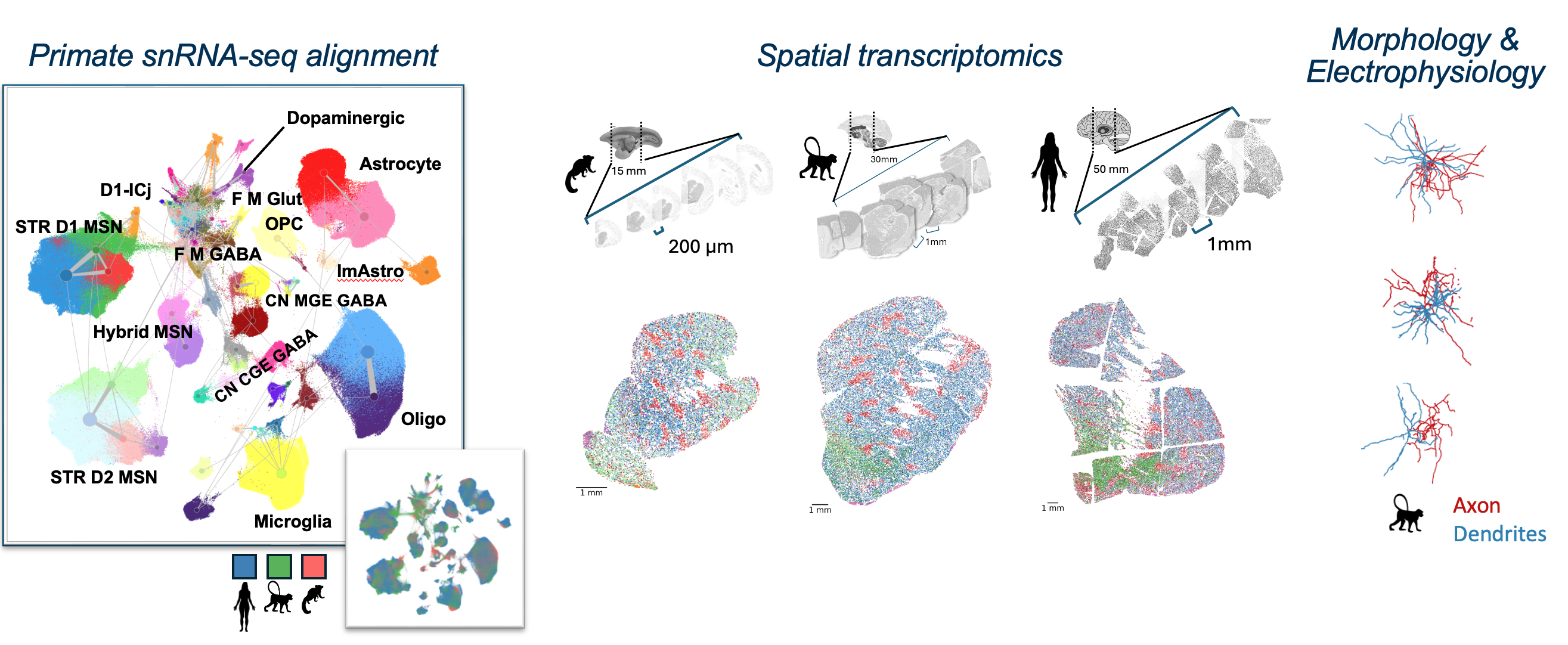
Taxonomy of human middle temporal gyrus generated with SMART-seq data in 2019
Overview
This data set includes single-nucleus transcriptomes from 15,928 total nuclei derived from both frozen and neurosurgical human brain specimens, to survey cell type diversity in the human middle temporal gyrus (MTG). Nuclei from 8 human tissue donors ranging in age from 24-66 years were analyzed, revealing 75 transcriptionally distinct cell types: 45 inhibitory neuron types, 24 excitatory neuron types, and 6 non-neuronal types. Note: these data were included in the subsequent “Human Multiple Cortical Areas - SMART-seq” data set
Taxonomy Name: 20190821_Adult_Human_MTG_SMARTseq
Taxonomy Description: Human MTG SMART-Seq Taxonomy
Species: Human
Version: 1.1.0
CCN Number: CCN201908210
AIT Number: 15.3
Resources
Download the Data
Learn more about the project and download the data
Download the taxonomy Allen Institute Taxonomy (AIT) file in .h5ad format from AWS s3
Publication
Conserved cell types with divergent features in human versus mouse cortex
Additional Resources
Explore the data using the RNA-Seq Data Navigator
Explore the data using the UCSC Genome Browser
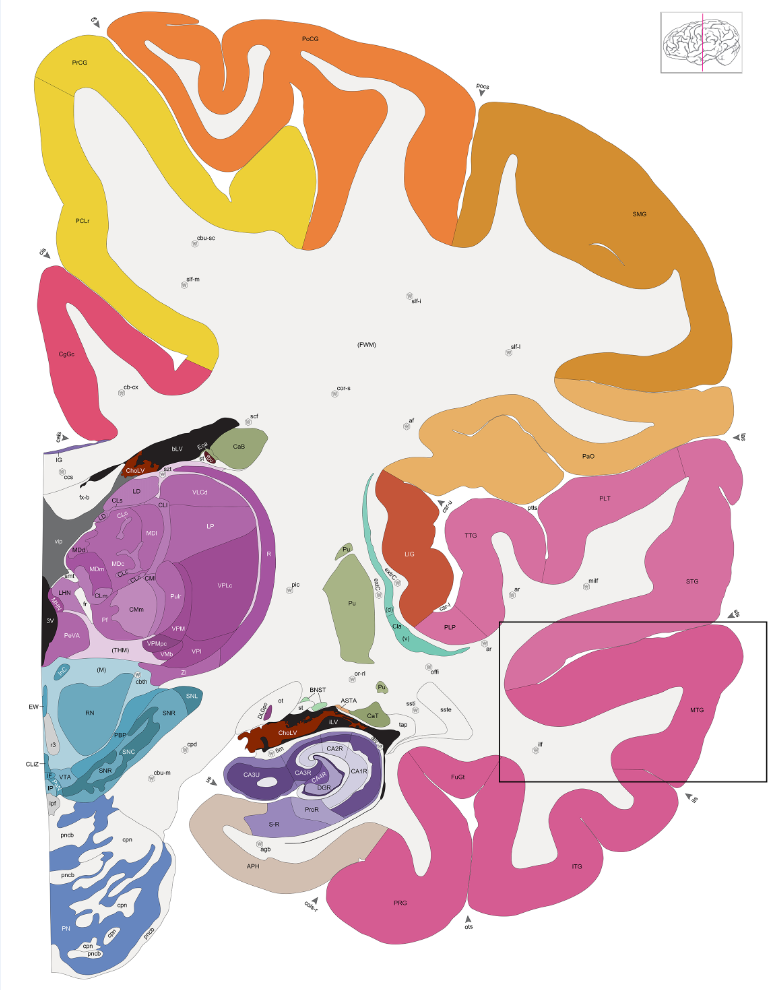
A cross-species taxonomy of the dorsal lateral geniculate nucleus (dLGN), the brain region that conveys visual information from the mammalian retina to the primary visual cortex
Overview
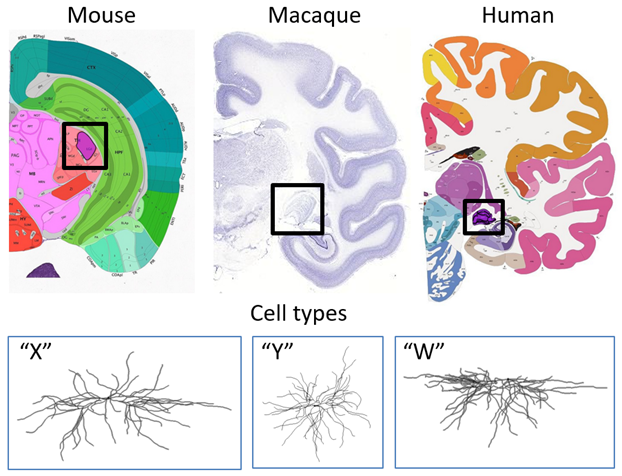
Abundant anatomical and physiological evidence supports the presence of at least three distinct types of principal or relay neurons in the dorsal lateral geniculate nucleus (dLGN), the brain region that conveys visual information from the mammalian retina to the primary visual cortex. This data set provides detailed transcriptional profiles of cells from this area, available for download. Cells derived from this area were compared across three species (human, macaque, and mouse) to assess cross-species correspondence based on transcriptional profiles.
Taxonomy Name: 20181231_Adult_CrossSpecies_LGN_SMARTseq
Taxonomy Description: Cross-species Lateral Geniculate Nucleus Taxonomy
Species: Human | Macaque | Mouse
Version: 1.0.0
AIT Number: Human - 102.0 | Macaque - 103.0 | Mouse - 104.0
CCN Number: Human - CCN201812310 | Macaque - CCN201812311 | Mouse - CCN201812312
Resources
Download the Data
Learn more about the project and download the data
Download the Human Taxonomy as Allen Institute Taxonomy (AIT) file in .h5ad format from AWS s3
Download the Macaque Taxonomy as Allen Institute Taxonomy (AIT) file in .h5ad format from AWS s3
Download the Mouse Taxonomy as Allen Institute Taxonomy (AIT) file in .h5ad format from AWS s3
Publication
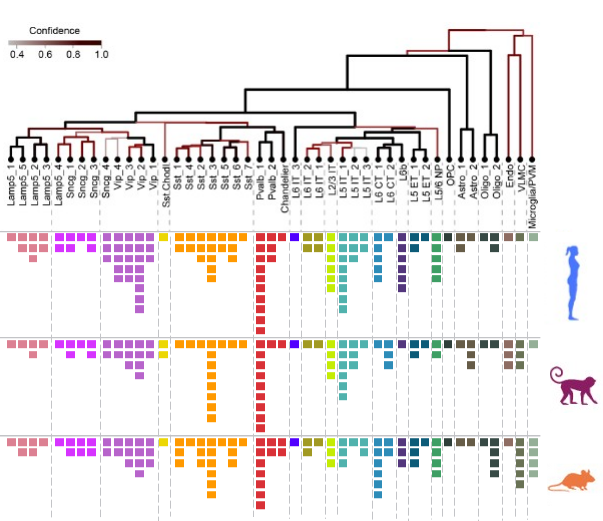
This resource summarizes the generation of a multimodal cell census and atlas of the mammalian primary motor cortex as the initial product of the BRAIN Initiative Cell Census Network (BICCN)
Overview
This resource summarizes the generation of a multimodal cell census and atlas of the mammalian primary motor cortex as the initial product of the BRAIN Initiative Cell Census Network (BICCN) and leads a series of 17 studies published in Nature. In total >3 million cells were profiled across modalities and species and >200TB of data and analysis tools are made freely available. Much of this work can be explored in the Cell Type Knowledge Explorer.
Taxonomy Description: Cross-species Primary Motor Cortex Taxonomy
Species: Human | Marmoset | Mouse
Version: 1.0.0
CCN Number: Cross-Species - CCN202002270 | Human - CCN201912131 | Marmoset - CCN201912132 | Mouse - CCN202002013
AIT Number: To be added
Resources
Download the Data
Download the data from the Cell Type Knowledge Explorer:
Download the Human Taxonomy as Allen Institute Taxonomy (AIT) file in .h5ad format from AWS s3
Publication
A multimodal cell census and atlas of the mammalian primary motor cortex
Cell Type Knowledge Explorer
Additional Resources
Transcriptomics Explorer (Human)
This study used single cell transcriptomics and performed cellular characterization of eight areas in human neocortex to better understand cortical areal specialization.
Overview
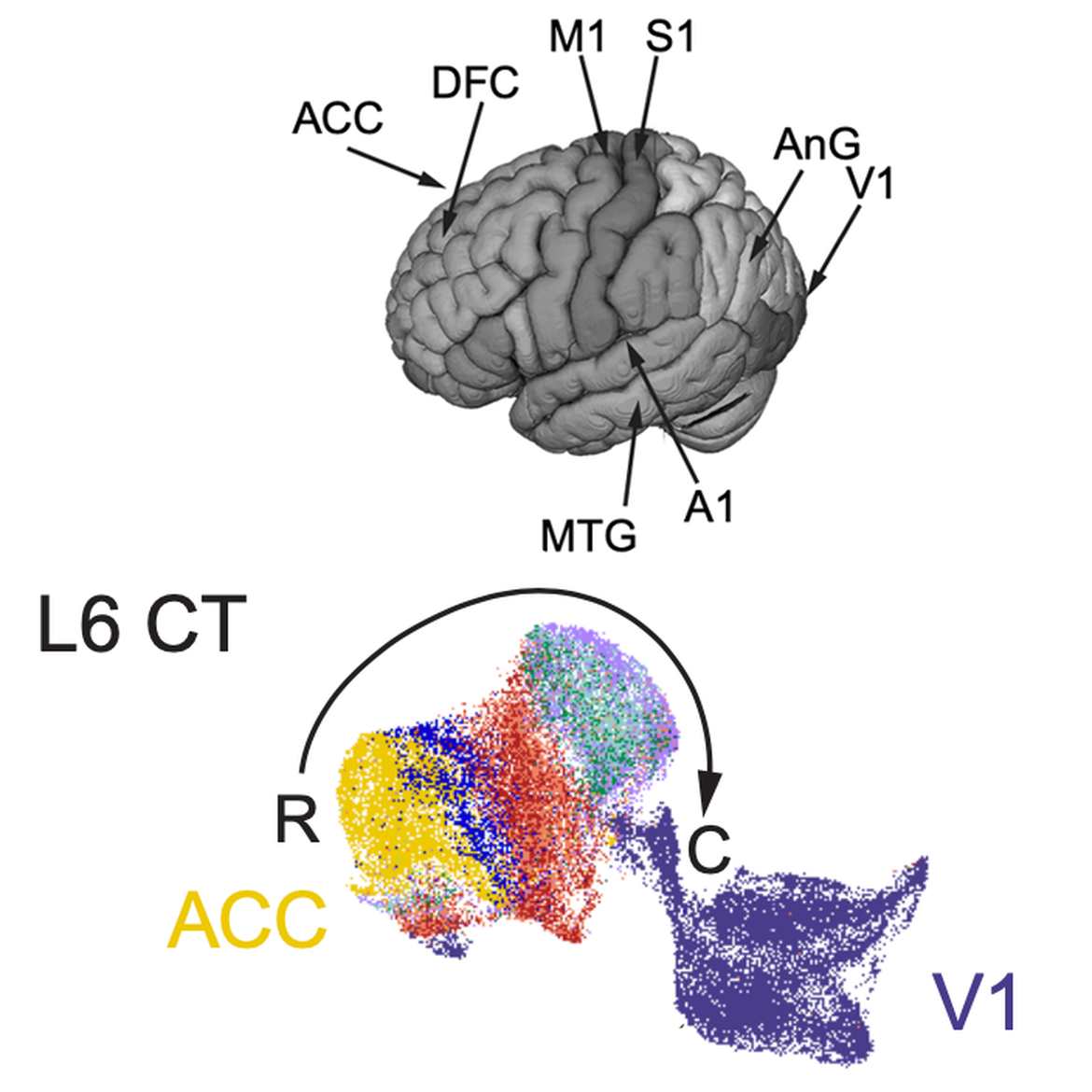
This study used single cell transcriptomics and performed cellular characterization of eight areas in human neocortex to better understand cortical areal specialization. This work identified 24 highly consistent cell subclasses across structures. However, proportions of excitatory neuron subclasses varied substantially, and some glia showed distinct layer organization across areas. Primary visual cortex showed characteristic organization with major changes both excitatory and inhibitory types, reflecting the importance of vision for humans.
Taxonomy Name: 20191012_Adult_Human_Neocortex_SMARTseq
Taxonomy Description: Multiple Cortical Areas - SMART-seq
Species: Human
Version: 1.0.0
CCN Number: CCN201910121
AIT Number: 105.0
Resources
Download the Data
Download the taxonomy as Allen Institute Taxonomy (AIT) file in .h5ad format from AWS s3
Publication
Transcriptomic cytoarchitecture reveals principles of human neocortex organization
Additional Resources
Explore the data using CELLXGENE
A taxonomy of the human middle temporal gyrus developed as part of the Seattle Alzheimer's Disease Brain Cell Atlas
Overview
This study used single cell and spatial genomics tools alongside quantitative neuropathology to understand the impact of Alzheimer's disease progression on cell types in middle temporal gyrus and dorsolateral prefrontal cortex. We mapped >1.2 million cells per region from 84 aged donors to 125 transcriptional types and showed which cell types changed in their abundance and gene expression with increasing disease pathology. This manuscript accompanies a freely available public resource to explore these data and to accelerate progress in AD research at SEA-AD.org.
Taxonomy Name: 20230505_SEAAD-Adult_Human_MTG_10X
Taxonomy Description: MTG - 10x SEA-AD
Species: Human
Version: 1.0.0
CCN Number: CCN20230505
AIT Number: 31
Resources
Download the Data
Learn more about the project and download the data
Publication
Integrated multimodal cell atlas of Alzheimer’s disease
ABC Atlas
Explore the single-nucleus transcriptomics data
Explore the spatial transcriptomics data
MapMyCells
Label your data using the human MTG taxonomy as a reference
Additional Resources
Explore the data using the Transcriptomics Explorer

This study used single-nucleus RNA sequencing to systematically survey cells across the entire adult human brain.
Overview
This study used single-nucleus RNA sequencing to systematically survey cells across the entire adult human brain. We sampled more than three million nuclei from approximately 100 dissections across the forebrain, midbrain, and hindbrain in three postmortem donors. Our analysis identified 461 clusters and 3313 subclusters organized largely according to developmental origins and revealing high diversity in midbrain and hindbrain neurons. This work provides the most comprehensive census of cells in adult human brain to date.
Taxonomy Name: 202210140_BICCN-Adult_Human_WholeBrain_10X
Taxonomy Description: Whole Human Brain Taxonomy
Species: Human
Version: 1.0.0
CCN Number: CCN202210140
AIT Number: 106
Resources
Download the Data
Learn more about the project and download the data
Publication
Transcriptomic diversity of cell types across the adult human brain
ABC Atlas
Explore the data in the ABC Atlas
MapMyCells
Label your data using the whole human brain taxonomy as a reference
Additional Resources
Explore the data using CELLXGENE

A taxonomy of the mouse visual and anterior lateral motor cortex
Overview
To investigate the diversity of cell types across the mouse neocortex at the transcriptional level, 15,413 cells were profiled from the primary visual cortex (VISp), and 10,068 cells from the anterior lateral motor cortex (ALM). These two regions represent distant poles of the neocortex and perform distinct functions. Analysis of these transcriptional profiles reveals 133 transcriptomic cell types. These types are divided into 61 GABAergic neuron types and 16 non-neuronal types, most of which are shared across both cortical areas, and 56 glutamatergic neuron types, most of which segregate by cortical region.
Taxonomy Name: 20181031_Adult_Mouse_VISp-ALM_SMARTseq
Taxonomy Description: Mouse V1 & ALMTaxonomy
Species: Mouse
Version: 1.0.0
CCN Number: CCN201810310
AIT Number: 2.1.1
Resources
Download the Data
Download the Allen Institute Taxonomy (AIT) file in .h5ad format from AWS s3
Publication
Shared and distinct transcriptomic cell types across neocortical areas
Additional Resources
Explore the data using the RNA-Seq Data Navigator
Explore the data using the UCSC Genome Browser
View the clustering & analysis code on GitHub
A hierarchical cell type taxonomy comprising 379 transcriptomic types found in the mouse isocortex and hippocampal formation
Overview
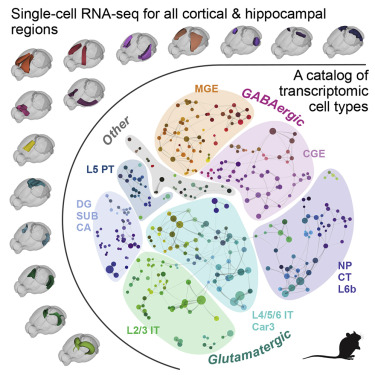
This manuscript used two complementary single-cell RNA-sequencing approaches, SMART-seq and 10x, to profile ∼1.2 million cells covering all regions in the adult mouse isocortex and hippocampal formation and derived a hierarchical cell type taxonomy comprising 379 transcriptomic types.
Taxonomy Name: 20210616_Adult_Mouse_Cortex-Hippocampus_SMARTseq
Taxonomy Description: Mouse Isocortex & Hippocampal Formation Taxonomy
Species: Mouse
Version: 1.0.0
CCN Number: CCN202106160
AIT Number: 5.1_CTX_HPF
Resources
Download the Data
Download the Allen Institute Taxonomy (AIT) file in .h5ad format from AWS s3 - 10X data & SMART-seq data
Publication
A taxonomy of transcriptomic cell types across the isocortex and hippocampal formation
Additional Resources
Explore the data using the Transcriptomics Explorer - 10X data & SMART-seq data
Explore the data using the cluster summary shiny app
View the clustering & analysis code on GitHub
A high-resolution transcriptomic and spatial atlas of cell types in the whole mouse brain
Overview
Using advanced technologies that profile individual cells, we unveiled an atlas cataloging the location and type of every cell in the adult mouse brain. From >8 million cells in multiple data modalities, the team identified over 5,300 cell types – far more than known before – and pinpointed their locations within the brain’s intricate geography. This study is part of a set of 10 papers in Nature that will likely define the mouse whole brain for years to come.
Taxonomy Name: 20230722_BICCN-Adult_Mouse_WholeBrain_10X
Taxonomy Description: Whole Mouse Brain Taxonomy
Species: Mouse
CCN Number: CCN20230722
AIT Number: 21
Resources
Download the Data
Download and explore the data via Python notebook
Publication
A high-resolution transcriptomic and spatial atlas of cell types in the whole mouse brain
ABC Atlas
Explore the data in the ABC Atlas
MapMyCells
Map your data using the whole mouse brain taxonomy as a reference